
Kiwi Ears Review 2026: Are Kiwi Ears IEMs Really Worth the Hype?
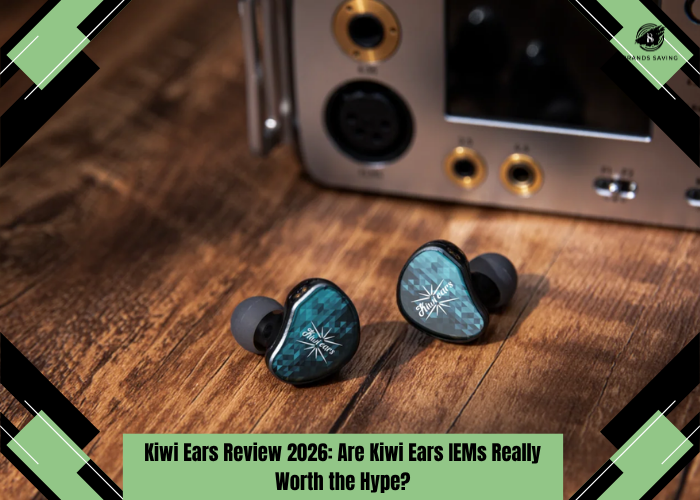
Quick Verdict: Kiwi Ears Review
| Category | Our Assessment |
| Overall Rating | 9.0/10 |
| Best For | Audiophiles, musicians and anyone moving beyond mainstream earbuds |
| Best Budget Pick | Kiwi Ears Cadenza |
| Best for Bass | Kiwi Ears Quartet |
| Best All-Round Upgrade | Kiwi Ears Quintet |
| Best for Monitoring | Kiwi Ears Orchestra Lite |
| Price Range Reviewed | $34.99–$249 |
| Biggest Strength | Excellent sound-per-dollar across multiple price points |
| Biggest Weakness | Model choice can be confusing for newcomers |
| Warranty | 1 year on reviewed IEMs; 3 months on included cables |
Kiwi Ears Review 2026
Spend any time researching affordable audiophile earphones and the name Kiwi Ears eventually appears. The brand has become particularly interesting because it doesn't operate only at one price point. You can enter the ecosystem with the Cadenza for $34.99, move into the Quartet at $109, jump to the technically ambitious Quintet at $219, or choose the eight-balanced-armature Orchestra Lite for $249. That creates an obvious problem for buyers.
Which one should you actually buy?
And perhaps more importantly: is Kiwi Ears a good brand, or is it another name benefiting from the constant hype surrounding inexpensive IEMs?
The answer is more interesting than a simple yes. Kiwi Ears is particularly good at giving each model a reason to exist. The Cadenza isn't merely a cheaper Quartet. The Quartet isn't just a budget Quintet. And the Orchestra Lite takes an entirely different all-balanced-armature approach. In this Kiwi Ears review, we'll break down the Cadenza, Quartet, Quintet and Orchestra Lite, examine sound signatures and driver configurations, discuss comfort and build quality, compare current pricing and determine which Kiwi Ears IEM makes the most sense for different listeners.
Check Today's Price
What Is Kiwi Ears?
Kiwi Ears is an in-ear monitor brand focused on enthusiast and professional audio. Its catalog ranges from inexpensive single-dynamic-driver earphones to elaborate multi-driver hybrids and balanced-armature monitoring systems. The company's current lineup extends well beyond the four models covered here. Its official store now includes newer products such as the Cadenza II at $49.99, Orchestra II at $349, Étude at $119, Astral at $299 and Septet at $269. That expanding lineup tells you something about Kiwi Ears' approach. Rather than selling one generic earphone at different prices, it experiments with driver configurations and tuning philosophies. For casual listeners, that provides choice. For audiophiles, it provides something even more valuable: different sonic flavors without immediately moving into four-figure custom-IEM territory.
Is Kiwi Ears a Good Brand?
From an audio-performance perspective, yes. Independent testing supports that conclusion. Headfonics rated the Orchestra Lite 8.4/10, praising its balanced and natural tuning, wide imaging and competitive price. The publication also found the Quartet's four tuning configurations noticeably different rather than purely gimmicky. Kiwi Ears also publishes detailed specifications and backs the core models in this comparison with a one-year IEM warranty and three-month cable warranty. The independent customer-service evidence is much thinner. Trustpilot currently shows 3.2/5, but that's based on only four reviews. One 2026 reviewer was highly positive about the sound, while a 2025 reviewer described cable and support frustrations involving a Kiwi Ears headphone. Four reviews are nowhere near enough to draw a meaningful brand-wide conclusion. So our assessment focuses primarily on product engineering, value, independent audio evaluations and the warranty rather than pretending four Trustpilot reviews represent thousands of owners.
Kiwi Ears Cadenza Review: The Budget Sweet Spot
If you're completely new to IEMs, the Cadenza is where we'd start. At $34.99, it uses a single 10mm beryllium-diaphragm dynamic driver. Its specifications include 32-ohm impedance, 110dB SPL/mW sensitivity, a 20Hz–20kHz frequency range and medical-grade resin shells. It also uses a detachable 0.78mm 2-pin cable terminating in 3.5mm. The technical simplicity is actually part of the appeal. One well-tuned dynamic driver doesn't require complicated crossovers to integratedifferent driver types. The result can feel coherent from bass through treble. Kiwi Ears describes the Cadenza as balanced rather than aggressively bass boosted, with the goal of retaining clean mids while still producing satisfying low-end weight. For $35, that's exactly the direction we'd want. You don't need an IEM that impresses for thirty seconds and becomes exhausting after an hour. You want something musical enough for everyday listening.
Who is the Cadenza for?
Someone coming from inexpensive wireless earbuds is the obvious buyer. It's also an excellent secondary IEM for an enthusiast who wants an inexpensive wired set for travel, work or casual listening. The biggest reason not to buy it is equally straightforward: if you're already accustomed to good $150–$300 IEMs, don't expect a $35 single-driver earphone to suddenly provide the same layering, resolution and technical performance.
Kiwi Ears Quartet Review: Best for Bass Lovers
The Quartet takes a dramatically different approach. At $109, it combines two 10mm titanium dynamic drivers with two custom balanced-armature drivers. The two dynamic drivers operate in an isobaric arrangement designed to provide deeper and more impactful bass. This isn't simply a Cadenza with more drivers. It's deliberately more physical. Kiwi Ears positions the Quartet for listeners including drummers and bass guitarists who want stronger low-frequency impact while maintaining clear mids and treble.
The other major feature is its tuning system. Two switches create four possible tuning configurations, letting you alter the presentation according to music or preference. That's sometimes a gimmick on affordable IEMs. Here, independent testing is encouraging. Headfonics specifically found the four configurations noticeably different from one another.
How does the Quartet sound?
Expect a warmer and more forceful presentation than a strictly neutral studio monitor. The low end is the star. But Kiwi Ears uses a passive low-pass crossover at 350Hz, aiming to keep the emphasized bass from overwhelming the mids. That makes the Quartet particularly attractive for electronic music, hip-hop, modern pop, rock and anything where kick drums and basslines matter. If you're primarily listening to acoustic music and chasing strict neutrality, other models make more sense.
Kiwi Ears Quintet Review: The Technical All-Rounder
The Quintet is where Kiwi Ears starts getting technically ambitious.
It costs $219 and contains five drivers per ear: a DLC dynamic driver, two balanced-armature drivers, one micro-planar driver and one piezoelectric driver.
Four different driver technologies inside one IEM sounds impressive on a specification sheet. But more drivers don't automatically produce better sound. The difficult part is making them behave like one coherent system. The dynamic driver handles low frequencies, balanced armatures contribute to the mid/upper ranges, while the micro-planar and PZT technologies are used to extend detail and treble performance. Kiwi Ears claims treble extension up to 40kHz and positions the Quintet as a high-resolution, studio-monitor-like design. The practical benefit isn't hearing a magical 40kHz tone. It's the attempt to create a more open, detailed and layered upper-frequency presentation.
Who benefits from the Quintet?
This is the model we'd point toward for an enthusiast who has already experienced budget IEMs and wants a meaningful technical upgrade. It makes more sense when you're actively listening for separation, micro-detail, imaging and texture rather than simply wanting more bass. At $219, expectations should be much higher than with Cadenza. Fortunately, the driver architecture gives the Quintet a genuine reason to cost more rather than relying solely on nicer packaging.
Kiwi Ears Orchestra Lite Review: Best for Balanced Monitoring
The Orchestra Lite costs $249 and uses a completely different architecture from the Quintet. Instead of combining driver technologies, it uses eight balanced-armature drivers per side: two Knowles low-frequency BAs, four customized midrange BAs and two customized high-frequency BAs. It has 16-ohm impedance and 112dB sensitivity. This is the most monitor-like option among the four. Headfonics found the Orchestra Lite balanced and natural, with wide, holographic imaging. Its testing described instruments as natural, vocals as well supported and treble as controlled without obvious harshness. That's exactly why the Orchestra Lite remains relevant. It doesn't need to produce the most dramatic first impression. It needs to stay useful during long sessions.
Where does it fall short?
Balanced-armature bass doesn't always provide the physical slam that dynamic-driver fans expect. If you want sub-bass to feel visceral, Quartet is the more obvious choice. Headfonics also criticized aspects of the shell design while still giving the Orchestra Lite an 8.4/10 overall score. The current official product page additionally marks Orchestra Lite as a preorder product and warns that preorder items are non-cancellable and non-refundable. That's worth checking carefully before buying.
First Impressions: Build, Design and Setup
Kiwi Ears understands that enthusiast earphones shouldn't look like laboratory equipment. The Cadenza uses medical-grade resin shells and is available in several faceplate designs. Quartet also uses medical-grade resin, while Orchestra Lite comes in multiple colors and can be ordered in universal or custom configurations. The detachable-cable approach is another practical win. Cadenza and Quartet both use standard 0.78mm 2-pin connections. That means damaging a cable doesn't necessarily mean replacing the entire earphone. Setup is simple. Choose appropriate ear tips, connect the cable, plug the 3.5mm termination into a compatible source and listen. Tip selection deserves more attention than beginners often give it. A poor seal can dramatically reduce bass and change tonal balance. Before deciding an IEM “has no bass,” test several tip sizes.
Real-World Performance: What Changes as You Spend More?
The biggest misconception in IEM shopping is assuming that a $249 earphone should sound seven times better than a $35 one. Audio doesn't scale like that. The Cadenza can already provide very enjoyable tonality.
Spending more typically buys subtler improvements: better layering, cleaner separation during complicated passages, more precise imaging, improved texture and a greater sense of space. That's why Cadenza is such an effective value product. It's also why the Quintet and Orchestra Lite still have a reason to exist.
Bass
For maximum low-end impact, Quartet wins this group. Its dual-dynamic isobaric subwoofer architecture is deliberately designed around bass authority. Cadenza offers a more conventional dynamic-driver presentation. Quintet uses its DLC dynamic driver as part of a much broader technical system. Orchestra Lite takes the BA route, prioritizing control over visceral dynamic-driver slam.
Midrange
Orchestra Lite is particularly convincing for listeners who prioritize vocals and acoustic instruments. Its four dedicated midrange BAs and monitoring-oriented tuning help explain why independent testing found its instrumental presentation natural. Quartet is warmer because of its stronger low end. Quintet aims for greater resolution and separation.
Treble and Detail
Quintet has the most exotic solution. Its micro-planar and PZT drivers supplement the balanced armatures, with Kiwi Ears specifically targeting high-frequency detail and extension. Orchestra Lite is less showy. Its treble is controlled and natural rather than aggressively bright. That may actually make it preferable for long sessions.
Kiwi Ears Pricing & Value Analysis
The four models create a logical progression.
| Model | Current Price | Driver Configuration | Best For |
| Cadenza | $34.99 | 1 × 10mm dynamic | Budget/everyday listening |
| Quartet | $109 | 2DD + 2BA | Bass and tuning flexibility |
| Quintet | $219 | 1DD + 2BA + planar + PZT | Detail-focused enthusiasts |
| Orchestra Lite | $249 | 8BA | Balanced monitoring |
Prices are from Kiwi Ears' official store when checked in September 2026 and can change.
Which is the best value?
Cadenza. It's difficult to argue with $34.99 for a resin-shell IEM with a beryllium-diaphragm dynamic driver and replaceable 2-pin cable. The Quartet is the value choice for bass enthusiasts. The Quintet makes the strongest case for someone wanting to experience more sophisticated hybrid-driver engineering without moving into ultra-premium prices. The Orchestra Lite is the specialist choice. Spend the extra money if balanced monitoring, imaging and an all-BA presentation are what you specifically want.
Explore BRAND Collections
Kiwi Ears Pros & Cons
| Pros | Cons |
| Excellent options from budget to enthusiast pricing | Large lineup can confuse first-time buyers |
| Cadenza offers exceptional entry-level value | More drivers don't automatically mean better sound |
| Quartet has genuinely useful tuning options | Quartet may be too bass-forward for neutral listeners |
| Quintet uses four different driver technologies | Quintet costs substantially more than Cadenza |
| Orchestra Lite offers natural monitoring-oriented tuning | BA bass may lack dynamic-driver physicality |
| Attractive resin shells | Fit remains ear-dependent |
| Replaceable cables on major models | Accessories aren't always premium |
| One-year IEM warranty on reviewed products | Independent service-review sample is tiny |
Who Should Buy Kiwi Ears?
Kiwi Ears makes the most sense for someone who cares about sound quality more than wireless convenience. If you don't mind a cable and want to hear what inexpensive modern IEMs can achieve, Cadenza is one of the easiest ways into the category. Musicians and more experienced listeners have more specialized options.
| Listener | Best Choice |
| First IEM | Cadenza |
| Best budget value | Cadenza |
| Bass lover | Quartet |
| EDM / hip-hop listener | Quartet |
| Wants adjustable tuning | Quartet |
| Detail-focused audiophile | Quintet |
| Wants unusual driver technology | Quintet |
| Vocal/acoustic listener | Orchestra Lite |
| Stage/studio monitoring | Orchestra Lite |
Who Should Avoid Kiwi Ears?
Skip these IEMs if your top priority is wireless convenience. These are fundamentally wired enthusiast products. If you need active noise cancellation, seamless device switching, microphones optimized for calls and charging-case convenience, mainstream true-wireless earbuds make more sense. You should also avoid buying solely according to driver count. Eight balanced armatures aren't automatically superior to one dynamic driver. Tuning matters more. Finally, people who are extremely sensitive to in-ear pressure or deep insertion should pay close attention to fit and shell design rather than assuming every highly rated IEM will be comfortable for them.
Kiwi Ears Reviews: Customer and Expert Feedback
Independent professional coverage is broadly encouraging. Headfonics gave Orchestra Lite 8.4/10, specifically praising balanced/natural tuning, imaging and competitive pricing. Its Quartet review also confirmed that the tuning switches create audibly distinct configurations. Customer-service data is far less conclusive. Trustpilot currently lists only four reviews and a 3.2/5 score. One April 2026 reviewer enthusiastically praised the sound and appearance of their Kiwi Ears earphones while criticizing the included case. Another reviewer described problems with a headphone cable and a lengthy replacement process. With only four reviews, we wouldn't treat 3.2/5 as representative of the brand. The more useful consumer takeaway is that Kiwi Ears offers a one-year warranty on the IEMs discussed here but only three months on their included cables.
Kiwi Ears vs Major Competitors
Kiwi Ears competes in one of the most aggressive areas of personal audio. Moondrop, Truthear, Simgot and 7Hz all offer compelling IEMs.
| Brand | Key Strength | Typical Buyer | Main Difference |
| Kiwi Ears | Broad range of tuning/driver configurations | Beginners through enthusiasts | Particularly diverse lineup |
| Moondrop | Strong tuning heritage and large catalog | Audiophile listeners | Huge ecosystem |
| Truthear | Price-to-performance | Budget/midrange enthusiasts | More focused catalog |
| Simgot | Technical performance | Detail-oriented listeners | Often energetic tuning |
| 7Hz | Value and planar options | Experimental/value shoppers | Strong planar reputation |
What makes Kiwi Ears compelling isn't that it beats every competitor at every price. It doesn't. Its advantage is consistency of choice. You can start with Cadenza, decide you want substantially more bass and move to Quartet. Or you can prioritize resolution and jump to Quintet. Musicians can move toward Orchestra Lite. That's a healthy product ladder.
Kiwi Ears FAQ
Is Kiwi Ears a good brand?
Yes. Kiwi Ears offers several competitively priced IEMs and has received positive independent audio reviews, particularly for models such as Orchestra Lite and Quartet.
Is the Kiwi Ears Cadenza worth it?
At its current $34.99 price, Cadenza is one of the strongest values in Kiwi Ears' lineup. It combines a 10mm beryllium-diaphragm dynamic driver, resin shells and a detachable 2-pin cable.
Is Kiwi Ears Cadenza good for beginners?
Yes. Its low price, straightforward single-driver design and balanced tuning make it our preferred starting point among these four models.
Is Kiwi Ears Quartet better than Cadenza?
Technically, Quartet is more ambitious, with dual dynamic drivers, two balanced armatures and four tuning configurations. It is particularly worthwhile for listeners wanting stronger bass. Cadenza remains better value for casual use.
Is the Kiwi Ears Quartet bass heavy?
It's intentionally bass-centric. Its two 10mm titanium dynamic drivers operate in an isobaric arrangement designed to produce deeper and more impactful bass.
Is Kiwi Ears Quintet worth $219?
For detail-oriented enthusiasts, it can be. Quintet combines five drivers and four driver technologies per ear, making it considerably more technically ambitious than the budget models.
Is Kiwi Ears Orchestra Lite good for gaming?
Its strong imaging and layering can make it attractive for gaming as well as music. Independent testing specifically praised its wide and holographic imaging.
Does Kiwi Ears Orchestra Lite have good bass?
It offers controlled balanced-armature bass, but listeners seeking heavy physical sub-bass impact will probably prefer the dynamic-driver-based Quartet.
Does Kiwi Ears offer a warranty?
The Cadenza, Quartet and Orchestra Lite official pages state a one-year warranty on the IEMs and three months on the cable.
Do Kiwi Ears IEMs need an amplifier?
The reviewed models have relatively accessible impedance and sensitivity specifications, so they aren't inherently positioned as demanding desktop-only earphones. Your source still needs the correct connection and adequate output.
Which Kiwi Ears IEM is best?
For most beginners, Cadenza. For bass, Quartet. For technical detail, Quintet. For balanced monitoring and imaging, Orchestra Lite.
Cadenza vs Orchestra Lite: which should I buy?
Buy Cadenza if value and enjoyable everyday listening matter most. Choose Orchestra Lite if you're willing to spend significantly more for an eight-BA design emphasizing detail, imaging and balanced monitoring.
Final Verdict: Are Kiwi Ears IEMs Worth It?
After comparing the major models, Kiwi Ears' biggest strength becomes obvious. It doesn't force every listener toward the same sound. Cadenza proves you don't need to spend hundreds of dollars to get a thoughtfully designed wired IEM. Quartet adds something genuinely different: big dynamic-driver bass and adjustable tuning. Quintet is for the enthusiast who wants to explore a sophisticated hybrid system with dynamic, BA, planar and PZT technologies working together. And Orchestra Lite is the mature option the model we'd choose when natural midrange, controlled treble, layering and imaging matter more than maximum bass impact. That makes the answer to “Is Kiwi Ears a good brand?” an easy yes from a product and value perspective.
There are caveats. Don't assume driver count equals quality. Don't expect every shell to fit every ear. And don't interpret the current four-review Trustpilot profile as meaningful evidence either for or against the company.
- For most people entering the hobby, we'd buy the Cadenza first.
- For bass lovers, we'd choose Quartet.
- For enthusiasts wanting a substantial technical upgrade, Quintet is our favorite.
- For monitoring, vocals and balanced presentation, Orchestra Lite remains an excellent specialist option.
Shop BRAND Now
At BrandsSaving, we are dedicated to helping you shop more intelligently, spend more judiciously, and find superior value online. Regardless of whether you are a student, a parent, a fashion enthusiast, or just a sensible shopper, we link you to dependable savings opportunities and trustworthy buying options from your preferred brands across the globe
Subscribe
Sign up below to receive money-saving tips, frugal ideas, family-friendly recipes, and more.