
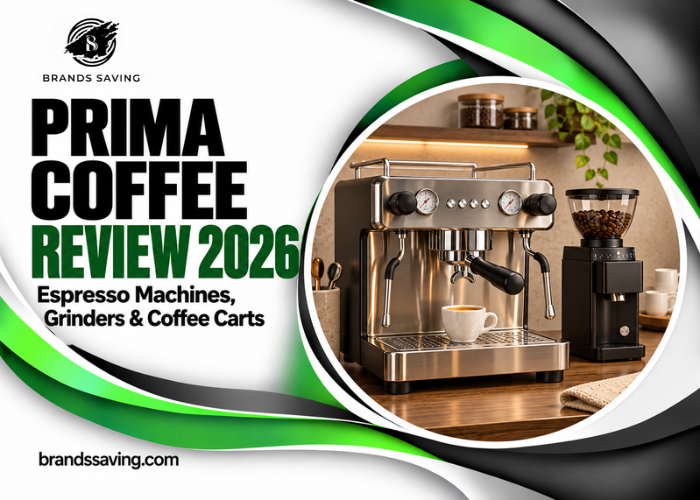
A good espresso setup starts with the drinks you actually make. If your weekday routine is a pair of cappuccinos, you may benefit from separate brew and steam boilers but have little reason to run a water line to your kitchen. If you're opening a coffee cart, that same choice affects refills, cleanup, and how smoothly you can work through a line. Prima Coffee Equipment sells to both buyers, which makes its catalog useful and gives you plenty of decisions to make before checkout.
This Prima Coffee review looks at the retailer as a place to buy equipment and compares several products that illustrate where it fits. The LUCCA A53 Mini V2 and A53 Pro show what changes as you move from a refillable machine to one with a plumbing option. The Kickstart Coffee Cart raises a different question: how much of a mobile bar does the purchase actually cover? Published specifications, retailer policies, and comparison listings form the basis of this review.
Quick Verdict
Prima Coffee is worth shortlisting if you want to compare serious home espresso equipment, build a mobile coffee bar, or source café gear. Its catalog helps you plan the full setup. Confirm the exact model’s return eligibility, delivered price, and warranty service before buying, especially if it ships from a distributor.
Find equipment that fits your setup
Start with the machines and grinders that suit your drink routine, then check water, power, and accessory requirements before building a cart.
Browse Prima Coffee Equipment →What Is Prima Coffee Equipment?
Prima Coffee Equipment is a specialty coffee gear retailer based in Louisville, Kentucky. The company says it started in 2009 and serves both home and commercial customers. Its selection spans brewers, grinders, espresso machines, water treatment equipment, and bar tools. It also sells its own Kickstart cart alongside machines from other brands, so the company’s role can differ depending on what you purchase.
That distinction matters when you’re comparing listings. A machine can appear at two retailers with the same controls and boiler configuration while shipping with different accessories or carrying different repair arrangements. Even on Prima’s site, a drop-shipped machine and a small in-stock accessory can have different return conditions. For a large purchase, match the model number, finish, included hardware, and warranty provider before treating two offers as equivalent.
Prima Coffee Espresso Machines, Grinders, and Accessories
LUCCA A53 Mini V2 for reservoir-fed espresso
The LUCCA A53 Mini V2 is a dual-boiler machine built by La Spaziale. Prima lists a 2.4-liter reservoir, a vibratory pump, a 53 mm group, programmable volumetric brewing, and PID temperature control. The reservoir makes sense for a kitchen or shared space where you can refill the machine easily and want to keep the setup movable. Prima lists a 16.5-inch width and depth and a 62-pound weight, so measure both the counter and the space you need to work around it.
The Mini V2 makes the strongest case for itself when you prepare several milk drinks in succession. Separate brew and steam boilers let you pull a shot and steam milk during the same workflow. Volumetric programming can help repeat a familiar recipe by ending each shot automatically once you’ve dialed it in. Keep a scale on the counter while setting up the recipe, since a programmed volume does not tell you the beverage weight in the cup or correct changes in grind and puck preparation.
LUCCA A53 Pro for flexible water supply
The LUCCA A53 Pro is also a dual-boiler model. Prima lists a 2.4-liter reservoir with the option to switch to a direct water connection, plus a built-in shot timer, lights that illuminate during extraction, and more cup clearance. Its 53 mm saturated group accommodates triple baskets in both the spouted and bottomless portafilters, according to the listing. Prima offers the direct-plumb kit and drain kit as separate options, so check what is included before budgeting for installation.
The Pro’s main advantage is that it can fit a changing setup. You could begin on a counter with the reservoir and later connect a suitable water supply when you move to a permanent bar. The extra clearance is also useful if your preferred cup and scale crowd the space under a portafilter. If you already know you will use a reservoir indefinitely and your cups fit the Mini V2, the Pro’s premium is harder to justify on workflow alone.
Grinders and espresso accessories
Prima Coffee’s grinder catalog ranges from home equipment to on-demand café grinders. Decide first whether you keep one espresso blend in the hopper, weigh a fresh dose for every drink, or switch frequently between espresso and filter coffee. Hopper dosing can save steps when several people use the same recipe. Single dosing is appealing if you change beans often, while moving one grinder between espresso and filter works best when it’s easy to record and return to a setting.
Model names deserve a close look. The Baratza Encore and Encore ESP Pro are different products. The latter is marketed for espresso as well as brewed coffee and emphasizes finer adjustment in the espresso range. Before relying on a grinder review, check it covers the precise model you’re buying and the kind of basket you intend to use. Noise, ease of cleaning, and whether a grinder doses neatly into your setup can matter more day to day than its headline burr size.
The most useful espresso accessories solve a problem you can name: a scale to establish your recipe, a pitcher sized for your usual milk drinks, and cleaning supplies approved for the machine. Check what already comes in the box. Prima’s Mini V2 listing includes a tamper, two portafilters, and a blind basket, for example. Its 53 mm group also calls for specifically compatible baskets and tools, which is worth checking if you already own 58 mm equipment.
Kickstart Coffee Cart and commercial coffee equipment
Prima’s Kickstart Coffee Cart is a collapsible workstation built around a single-group espresso workflow. The listing includes water and power distribution, a pump, a hot-and-cold sink kit, a pitcher rinser, a knock box, and connection hardware. The machine, grinder, and water reservoirs belong in your separate equipment budget. You can also cross-check the design on the Specialty Coffee Association’s awards entry page, which describes the submitted product.
Prima also groups equipment for coffee carts by practical needs, including grinders and supporting gear. If you’re building a full café, approach the wider commercial catalog from the menu backward. A bakery that mainly serves batch coffee may need a dependable brewer, adequate holding capacity, and a grinder built for batch doses before it needs a more elaborate espresso station. A milk-drink-heavy counter has different priorities, including space for pitchers, refrigeration within reach, and a workflow that lets a second person help during the rush.
Design and Day-to-Day Performance
A spec sheet is most helpful when you can picture one order from start to finish. At home, that means room to weigh your dose, tamp on a stable surface, set a cup and scale under the group, and reach the steam wand without rearranging the counter. Check the space above and around a reservoir machine as well as its footprint. An espresso machine can fit under cabinets yet still make filling the tank or moving the cup awkward.
On a cart, draw the work surface to scale and place the grinder, espresso machine, milk station, cups, and knock box. Then walk through two orders in a row, including rinsing the pitcher and collecting waste. The Kickstart’s integrated utilities can save fabrication work, but an efficient layout still depends on where each piece of equipment sits and who uses it. Work out how you’ll refill fresh water and empty wastewater at the venue, and confirm the venue’s electrical supply and any applicable requirements before ordering equipment.
For a café, ask for a quote that covers your busiest interval. A full day’s sales figure tells you little about how many drinks land in the first fifteen minutes of a rush. Share the expected drink mix and staffing pattern, since steaming milk, grinding doses, and handing off drinks can all limit output. Ask how consumable parts are sourced and who services the model locally, since downtime can cost more than a modest difference in the equipment quote.
Pricing and Value for Money
These are listed U.S. prices from Prima’s product pages at the time of research. Stock, configuration, tax, freight, and checkout totals can change. For the cart in particular, verify that the configuration you want is orderable and ask for the dispatch estimate if your opening date depends on it.
| Product | Listed price (USD) | Costs to check alongside it |
| LUCCA A53 Mini V2 | $2,850 | Espresso grinder, scale, and a water plan that meets the machine’s requirements. |
| LUCCA A53 Pro | $3,800 | Grinder plus any direct-plumb kit, drain hardware, filtration, and installation you choose. |
| Kickstart Coffee Cart | $3,900 | Espresso machine, grinder, reservoirs, refrigeration if needed, and any optional shelves. |
At these listed prices, the A53 Pro costs $950 more than the Mini V2 before installation or kit costs. That difference buys features you can evaluate against your actual routine. If a better grinder or a comfortable work surface would improve every drink you make, keep those items in the budget before paying for a plumbing option you may never use. If the machine will sit on a permanent bar, the ability to move away from reservoir refills is easier to value.
For the Kickstart, compare the price of an equipped workstation with an equivalent do-it-yourself build. Include the worktop, cart structure, sink, pump, fittings, and the cost of having the system fitted and checked. Then price the equipment both options still require. A cart with integrated utilities may be worth more when you have a short setup window or limited fabrication help, while an operator with a fixed site and installation support has more freedom to design around a particular menu.
Compare the cost of the complete setup
Check Prima’s listed prices against the grinder, fittings, or cart equipment you’ll need to put your setup to work.
Compare LUCCA Machines at Prima →Prima Coffee Pros and Cons
| Pros | Cons |
| Home and commercial equipment in one catalog | The breadth can make it harder for a first-time buyer to narrow the field. |
| Several LUCCA configurations to compare | The 53 mm platform requires compatible accessories. |
| Grinder options for different brewing and dosing routines | Similar product names can hide meaningful differences in grind adjustment. |
| Product listings help identify included tools and hardware | A cart listing price covers only part of a functioning mobile bar. |
| Kickstart integrates plumbing and power distribution | Venue requirements and utility compatibility still need checking. |
| Dedicated shipping and return policy pages | Commercial and drop-shipped orders can face return restrictions. |
Who Should Buy From Prima Coffee?
Prima is a strong candidate if you already know what you want to make and are trying to assemble the equipment to do it. Its range makes it easy to put together a shortlist that includes more than the main machine. Home espresso buyers can work through the grinder and accessory decisions in the same place. Mobile operators can use the cart catalog to compare the utilities and bar tools that turn a work surface into a functioning station.
| Buyer | Best starting point |
| Home espresso and frequent milk drinks | Compare the A53 Mini V2 with the A53 Pro based on water supply and counter space. |
| Filter coffee drinker | Start with a grinder suited to brewed coffee and a brewer you will use regularly. |
| Pop-up or event operator | Price the Kickstart as a workstation and request lead times for every major component. |
| Fixed café or bakery | Ask for a system quote based on your menu, peak volume, and local service options. |
Who Should Look Elsewhere?
If your priority is a simple first espresso setup, start your comparison at a lower price and leave room in the budget for a capable grinder. Buyers who are still deciding whether they want to weigh doses and steam milk by hand may get more from a demonstration or a smaller initial purchase. A machine built for a more involved workflow earns its price only if you’ll use those controls regularly.
Consider other sellers if an easy return, local repair, or delivery to a hard deadline will determine whether the purchase works. Prima’s published exceptions make it especially important to check these details with the exact SKU. If you are fitting out a café far from a service partner, ask who can work on your machine at the location and how long common parts take to arrive. A storefront with a narrower catalog may still be a better fit if it can meet that requirement.
Customer Feedback and Common Buying Concerns
Prima’s product pages have reviews or Q&A areas, but the Kickstart listing showed zero reviews in the version consulted. Available feedback was too limited to estimate retailer-wide satisfaction or how often delivery and service problems occur. When comparing Prima Coffee reviews, give greater weight to accounts that identify the exact order, explain how it shipped, and describe how a damaged item or warranty claim was handled. A detailed equipment review can tell you how the machine feels to use, while a detailed order review can tell you what support looked like after checkout.
Prima’s dedicated return policy asks for eligible items to be returned within 30 days of delivery and in good condition with the original packaging and accessories. It says return shipping is generally the customer’s responsibility and that a restocking fee of up to 20% can apply in some circumstances. Clearance and outlet sales are final. The policy also flags commercial and distributor drop-ship items as potentially nonreturnable or subject to fees. The Mini V2 is marked drop-shipped, for example, so ask for its terms in writing before placing the order.
For a shipped machine or cart, read the dedicated shipping policy and get the delivery method and handling instructions for the order. Ask who handles warranty claims, who pays freight if the equipment needs repair, and whether support is available at your location. Keep the packing materials until you know the machine is working and have confirmed what the seller requires for any return or repair shipment.
Prima Coffee vs. Clive Coffee and Seattle Coffee Gear
Clive Coffee is a natural cross-shop because it lists both LUCCA models. Seattle Coffee Gear offers another comparison for buyers who want to verify repair and warranty arrangements before choosing a brand or model. Compare the same configuration and the same delivery address wherever possible. A carrying case, trim option, or included accessory that you won’t use matters less than the service coverage you’re likely to need.
| Retailer | Most useful comparison | What to verify |
| Prima Coffee Equipment | Home espresso and commercial sourcing, including a dedicated cart catalog. | Lead time, delivered total, and eligible returns by SKU. |
| Clive Coffee | A like-for-like LUCCA comparison from another specialty seller. | Finish, included tools, and which party provides warranty service. |
| Seattle Coffee Gear | Alternative espresso equipment with published repair resources. | Whether the machine is on its serviceable list and how warranty handling works for that model. |
Frequently Asked Questions
Is Prima Coffee Equipment legit?
Yes. Prima Coffee Equipment is an established specialty retailer with identifiable operations in Louisville, Kentucky, a public equipment catalog, and dedicated shipping and return policies. For a high-value order, confirm the exact seller, stock status, and terms that apply to your SKU.
What is the difference between the LUCCA A53 Pro and A53 Mini V2?
Both are dual-boiler espresso machines. The Mini V2 uses a refillable reservoir, while the Pro can use its reservoir or connect to a water line with the appropriate kit. The Pro also includes a built-in shot timer, extraction lighting, and additional cup clearance.
Can the LUCCA A53 Mini V2 work on a coffee cart?
Prima lists the Mini V2 for low-volume use and presents it as a cart option. Its reservoir can be practical for occasional service if you can refill it conveniently. Before committing, confirm the venue’s requirements, expected drink volume, electrical supply, and whether the machine fits your planned workflow.
Does the Kickstart Coffee Cart include an espresso machine and grinder?
No. Prima lists the cart and integrated utilities, including the pump, sink kit, pitcher rinser, and knock box. Budget separately for the espresso machine, grinder, water reservoirs, and any refrigeration or other equipment your menu requires.
Should I buy a separate grinder for espresso?
A dedicated espresso grinder makes sense if you switch often between espresso and filter coffee or want to leave a recipe dialed in. A capable multipurpose grinder can work for a small kitchen if it offers sufficiently fine control and you can reliably return to your settings.
Can I use a 58 mm tamper with the LUCCA A53 machines?
The Mini V2 and Pro use a 53 mm group. Choose tampers, baskets, and other fitted tools that explicitly match your machine and basket. Check the contents of the package before buying duplicates, since the Mini V2 listing already includes a compatible tamper.
What is Prima Coffee’s return policy?
Prima’s dedicated policy calls for eligible orders to be returned within 30 days of delivery with the original packaging and accessories. Return shipping is generally the customer’s responsibility. Restocking fees or exclusions may apply, particularly for some commercial or drop-shipped products, and clearance and outlet sales are final.
Does Prima Coffee offer a warranty on espresso machines?
Coverage depends on the product. For example, Prima’s Mini V2 listing specifies one year of commercial parts coverage and 90 days of commercial labor coverage through Prima, with return shipping excluded. Ask for the written terms that apply to your exact model and intended use.
Is Prima Coffee better for home buyers or cafés?
It can serve both. Home buyers can use the catalog to compare machines, grinders, and accessories. Café buyers benefit most when they request a quote that accounts for peak service, utilities, freight, and repair support. Those factors can change which equipment and seller offer the best value.
Final Verdict: Is Prima Coffee Worth Buying From?
Prima Coffee is worth shortlisting when you want to make several pieces of a coffee setup work together. Among the machines covered here, the A53 Mini V2 is the more straightforward pick for a reservoir-fed bar, and the Pro earns consideration when the option to plumb in or the added working clearance matters. For a mobile business, the Kickstart’s case rests on how much time and fabrication its built-in utilities save after you price the equipment needed to serve your menu.
The strongest reason to shop at Prima is the ability to compare machines, grinders, water equipment, and cart components in one place. The terms on a high-value order deserve the same attention as the hardware. Get a delivered price and the applicable return and service terms for the exact model, then compare them against at least one equivalent offer before committing.
Check the details before you order
Review the exact configuration and ask Prima about lead time, delivery, and warranty handling for your machine or cart.
Visit Prima Coffee Equipment →