
UCARI Review 2026: Does the Hair-Based Food Intolerance Test Really Work?
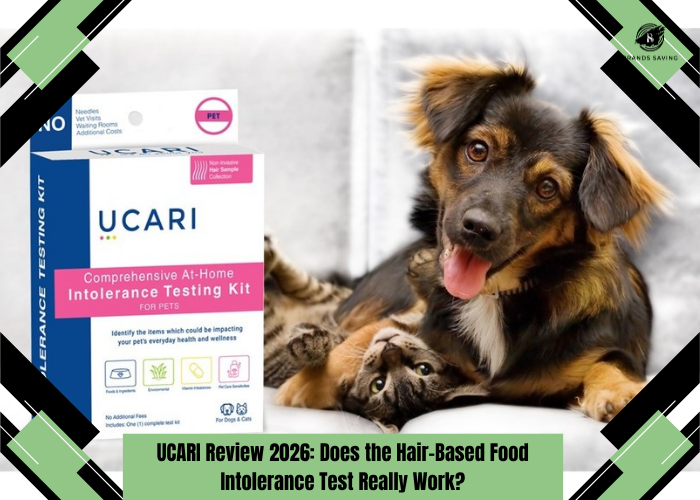
Quick Verdict
| Category | Our Take |
| Overall Rating | 6.5/10 |
| Best For | People who understand the test's limitations and want a non-invasive wellness screening tool to structure an elimination/reintroduction experiment |
| Human Test | Screens 1,500+ food, environmental, skin-care and nutritional items |
| Pet Test | Screens 1,000+ items for dogs and cats |
| Method | Hair sample analyzed using bioresonance |
| Turnaround | Typically 1–2 business days after sample reaches UCARI's U.S. lab |
| Historical Listed Price | $89.99 for human or pet kit on UCARI's indexed shop pages |
| Biggest Strength | Extremely convenient, broad screening and easy-to-use reports |
| Biggest Weakness | Bioresonance/hair analysis lacks accepted clinical validation for diagnosing food intolerance |
| Bottom Line | Legitimate company and real service; questionable diagnostic validity |
UCARI Review: Convenient Wellness Tool or Reliable Food Intolerance Test?
Few health problems are more frustrating than symptoms without an obvious cause. You eat normally, then feel bloated. Your skin suddenly becomes irritated. Certain meals seem to trigger headaches. Or your dog keeps scratching despite switching foods.
The natural question is: What am I reacting to?
Finding an answer can be difficult because digestive symptoms, headaches, fatigue and skin problems can have many potential causes. UCARI offers an appealing shortcut. Instead of scheduling appointments or having blood drawn, you order a kit, send in a few strands of hair and receive a report screening more than 1,500 potential items for humans or more than 1,000 for pets. That's a compelling proposition. But the convenience of a test and the scientific validity of a test are separate issues. UCARI analyzes hair using bioresonance technology. According to the company, its equipment captures electromagnetic signals associated with the sample and compares them with stored frequencies for foods and other substances. Mainstream allergy organizations take a very different view.
The Australasian Society of Clinical Immunology and Allergy lists hair analysis and bioresonance among non-evidence-based allergy testing methods it does not recommend. Clinical food-allergy guidelines similarly state that bioresonance and hair analysis lack demonstrated validity and reproducibility. So this review requires more nuance than simply asking whether customers like their results. We'll examine what UCARI actually does, what you receive for your money, UCARI food intolerance test reviews, pet testing, customer feedback and—most importantly whether the results should influence health decisions.
Check Today's Price
What Is UCARI?
UCARI sells at-home intolerance screening kits for humans and pets. The human test screens 1,500+ items across four broad areas: food, environmental factors, skin/personal-care ingredients, and nutritional categories. The pet version screens more than 1,000 items and is designed for dogs and cats. The appeal is accessibility. There is no blood draw or skin prick.
You don't visit a clinic. Instead, UCARI asks for a small hair sample, which is mailed to its U.S.-based laboratory. Results are then delivered digitally through the customer's online account. UCARI categorizes its approach as complementary and alternative medicine and explicitly states that its results do not constitute a medical diagnosis. That disclosure matters. UCARI should therefore be evaluated as a wellness screening product, not as a substitute for an allergist, gastroenterologist, dietitian or veterinarian.
How Does the UCARI Intolerance Test Work?
The customer experience is surprisingly simple. After receiving the kit, you register its unique ID on UCARI's website. Next, you collect approximately 10–15 strands of head hair. UCARI says you don't need freshly washed hair, although heavy styling products should be avoided. People without sufficient head hair can submit body hair, with UCARI recommending around 25 strands. Colored and chemically treated hair is generally accepted.
The sample goes into the supplied collection bag and then the prepaid return envelope. Once UCARI receives it, results are typically uploaded to the secure portal within one to two business days. Mailing itself can take longer; UCARI says transit may take up to 10 business days. That part of the experience is excellent. It's difficult to imagine making sample collection much easier.
What Is Bioresonance Testing?
This is where the UCARI intolerance test review becomes controversial. UCARI says every substance has an electromagnetic frequency and that human cells do as well. Its equipment captures signals associated with the submitted hair and compares them against a database of frequencies representing foods, environmental substances and other items. The company describes the process as bioresonance.
UCARI's current FAQ is also unusually explicit that its equipment will respond to other materials placed in the testing disc and argues that meaningful interpretation depends on correctly collected biological material. It emphasizes that the product is a wellness screening tool rather than controlled scientific proof of a condition.
We appreciate that disclosure. But it does not resolve the validation problem. Published clinical guidelines addressing alternative food-testing methods state that bioresonance and hair analysis have questionable theoretical foundations and have not been technically or clinically validated sufficiently to justify diagnostic use. That is the central weakness of UCARI.
Is UCARI Accurate?
If by accurate you mean: “Can UCARI definitively tell me which foods my body is medically intolerant to?”
We don't find adequate evidence to support that conclusion. ASCIA specifically advises against hair analysis and bioresonance as evidence-based allergy testing methods. It warns that unvalidated tests can lead to unnecessary dietary restrictions, food anxiety, nutritional problems and delayed access to appropriate diagnosis. The updated S2k clinical guideline on IgE-mediated food allergy reaches a similar conclusion, stating that bioresonance and hair analysis have not been successfully validated technically or clinically.
Importantly, UCARI doesn't claim to diagnose IgE-mediated food allergies. Its product targets intolerances and sensitivities. But that distinction does not create clinical validation for bioresonance hair analysis as a food-intolerance diagnostic. UCARI itself now says its results are not a medical diagnosis and are better treated as a starting point for elimination and reintroduction. That's also how we would use it.
Food Intolerance vs Food Allergy
This distinction is essential. A food allergy involves the immune system and can potentially produce severe or life-threatening reactions. Food intolerance generally refers to difficulty processing or tolerating a particular substance and can produce symptoms such as digestive discomfort without the same allergic mechanism. UCARI explicitly states that it does not test for allergies. So if you experience symptoms such as swelling, wheezing, difficulty breathing, fainting or other potentially serious reactions after eating something, UCARI should not be used to decide whether that food is safe.
Seek appropriate medical assessment. Even conventional allergy testing requires clinical interpretation. ASCIA notes that positive skin or blood allergy tests do not automatically prove clinical allergy, and supervised food challenges are sometimes needed to establish whether a food actually causes a reaction. If even validated allergy tests require context, a wellness hair screen deserves substantially more caution.
UCARI Food Intolerance Test Review
Judged purely on usability, the human UCARI kit is impressive. It screens more than 1,500 potential items, far more than most people could reasonably investigate one at a time without a structured process. Results are presented using a color-coded format and ranked by reactivity. UCARI then encourages users to turn those results into a structured elimination process: remove highly reactive items, observe symptoms and reintroduce foods intentionally.
This is actually the most potentially useful part of the product. Not because the hair result proves intolerance. Rather, it gives you a structured hypothesis.
Instead of thinking: “Everything I eat seems to bother me,”
you have a shortlist to investigate. The problem begins when a shortlist is treated as a diagnosis.
The Ingredient Checker Makes Results More Practical
UCARI's current website also promotes an Ingredient Checker. The tool is intended to compare food labels against sensitivity results. Conceptually, that's smart. Food labels are complicated. A report telling you to avoid a specific additive isn't very useful if you don't recognize it inside a 20-ingredient packaged product. An ingredient-analysis tool makes the report easier to translate into everyday shopping decisions. Again, however, its usefulness depends on the reliability you assign to the original screening results. We would use it during a carefully monitored elimination experiment not as justification for permanently banning dozens of foods.
First Impressions and Setup
UCARI is the opposite of intimidating medical testing. The kit is deliberately simple. You receive instructions, a collection bag, a return envelope and access to digital results. There is no equipment to assemble, no finger prick and no specimen requiring refrigeration.
The process is: register, collect, mail, wait. That simplicity is one of UCARI's strongest selling points.
The prepaid return shipping is another welcome detail. Once the sample reaches the lab, the promised one-to-two-business-day processing time is fast compared with many mail-in wellness products. From a user-experience standpoint, UCARI scores highly.
Real-World Experience: What Should You Expect?
The report is likely to contain a lot of information. That can feel empowering. It can also create a problem. If your results flag numerous everyday foods, immediately eliminating everything can turn a normal diet into a complicated and unnecessarily restrictive one. UCARI's own recent educational content takes a more measured position, describing intolerance testing as a screening tool that should be paired with tracking, elimination and reintroduction rather than treated as a diagnosis. That's sensible. Suppose your report highlights dairy, almonds and tomatoes.
Don't assume: “I can never eat these again.”
A more rational experiment would be to track your symptoms, change one manageable variable or carefully structured group at a time, and then reintroduce foods to see whether the effect repeats. If symptoms persist regardless of dietary changes, that is useful information too. It suggests you may need to investigate another explanation rather than continuing to remove foods.
UCARI Pet Intolerance Test Review
The pet test follows the same general idea. UCARI screens more than 1,000 potential items for dogs and cats using submitted hair.
The marketing focuses on common owner concerns such as: itching, paw licking, skin irritation, digestive problems, and low energy.
Historically, UCARI's indexed store listed the Pet Intolerance Test at $89.99 with free shipping. Pet owners understandably find this appealing. Anyone who has spent months switching dog food because of recurring itching knows how frustrating trial and error can become. Customer testimonials hosted by UCARI include pet owners who report improvements after changing diets according to the results. Those stories are interesting. They are not clinical validation.
Is UCARI Accurate for Dogs?
We would apply exactly the same caution to pets. Do not interpret a UCARI pet result as a veterinary diagnosis. UCARI itself describes hair testing as wellness screening rather than veterinary diagnosis or controlled scientific proof. A dog can scratch because of fleas, environmental allergies, infection, parasites, contact irritation or other medical conditions. A cat with recurring gastrointestinal symptoms may have a problem that requires veterinary investigation. Changing a food based on a UCARI report may create a useful dietary experiment. Replacing veterinary evaluation with the report is a very different and much riskier decision.
UCARI Pricing & Value
UCARI's indexed shop pages have listed both the human and pet intolerance kits at $89.99, including shipping. Current pricing should always be checked directly because promotions and bundles can change. At roughly $90, the price is not outrageous for an at-home wellness service.
You receive: the collection materials, prepaid return shipping, U.S.-lab processing, a broad digital report, and action-oriented tools.
The real value question isn't about how many items are tested. It's about what those results mean. A test covering 1,500 items is only better than one covering 100 if the underlying screening method provides useful predictive information. That's why we score UCARI's convenience much higher than its scientific value.
Is UCARI Worth $89.99?
For a curious wellness consumer who understands that this is not validated diagnostic testing, maybe.
You're essentially paying for: a broad screening report, convenience, and a framework for experimentation.
If the report helps you organize a sensible food diary and elimination/reintroduction process, you may feel the purchase was worthwhile. But if you're spending $90 because you believe UCARI will medically determine the exact cause of chronic gastrointestinal symptoms, we'd spend that money differently. A healthcare professional or registered dietitian can evaluate symptoms in context and determine whether evidence-based testing, dietary assessment or specialist referral is appropriate.
Explore BRAND Collections
UCARI Refund Policy
This deserves attention before ordering. CARI's current FAQ says customers who change their minds should contact the company within seven days of placing the order, and the kit must remain unopened and unused. An indexed version of the company's detailed FAQ also states that eligible refund returns may incur a $12 restocking fee per test, while opened kits generally aren't refundable unless defective or damaged. Sale items may also be excluded. Because policies can change, check the current refund terms before purchasing. This is especially important with a testing service: once you've opened and used the collection kit, your ability to simply change your mind is naturally much more limited.
UCARI Pros & Cons
| Pros | Cons |
| Completely non-invasive hair collection | Bioresonance lacks accepted clinical validation for diagnosing food intolerance |
| No needles or blood draw | Hair analysis is not recommended by major allergy organizations as diagnostic testing |
| Screens 1,500+ items for humans | Large number of flagged items could encourage unnecessary restriction |
| Pet test screens 1,000+ items | Not a veterinary diagnostic test |
| Fast processing after sample arrives | Cannot diagnose food allergy |
| Prepaid return envelope | Results should not be treated as proof of intolerance |
| Easy-to-understand digital reports | Limited independent clinical evidence for UCARI's method |
| U.S.-based processing | Seven-day change-of-mind refund window is restrictive |
| Ingredient Checker adds practical usability | Report usefulness depends heavily on interpretation |
| Structured elimination/reintroduction approach | Better evidence-based routes exist for many medical symptoms |
| Human and pet options | Retesting can increase long-term cost |
| UCARI openly states it is wellness screening | “Nutritional imbalance” results should not replace validated deficiency testing |
Who Should Buy UCARI?
UCARI makes the most sense for someone who has already accepted its limitations. You may have vague food-related discomfort and want a structured starting point for a diary and elimination experiment. You don't want needles. You like the idea of receiving a broad report quickly. And most importantly, you're willing to verify what the report suggests rather than accepting every result as fact. For that user, UCARI can function as an organizational wellness tool.
| Buyer | Recommendation |
| Wants non-invasive wellness screening | Consider |
| Wants ideas for an elimination experiment | Potentially useful |
| Wants 1,500+ items screened | UCARI's strength |
| Wants a medically validated intolerance diagnosis | Not recommended |
| Suspects food allergy | See an appropriate healthcare professional |
| Pet has unexplained chronic symptoms | Veterinary evaluation first |
| Wants confirmed vitamin deficiency testing | Choose validated medical testing |
| Plans to eliminate many foods from a child's diet | Seek professional guidance first |
Who Should Avoid UCARI?
We would skip UCARI if you want definitive medical answers.
If your question is: “Am I allergic to peanuts?”
UCARI is the wrong product.
If your question is: “Do I have celiac disease?”
UCARI is the wrong product. If you're experiencing unexplained weight loss, blood in stool, persistent severe abdominal pain, significant vomiting, breathing problems or another concerning symptom, don't delay medical assessment to complete a mail-in wellness test. We would also be cautious about using UCARI results to impose highly restrictive diets on children. ASCIA warns that non-evidence-based allergy testing can contribute to unnecessary avoidance, impaired growth, malnutrition and food anxiety. The same principle applies to pets: persistent symptoms deserve veterinary assessment.
UCARI Reviews: What Customers Say
UCARI's own testimonial pages contain a large collection of positive feedback, including reviews attributed to customers from Amazon and direct customers. The recurring positive themes are easy to identify. Customers frequently praise: the simple hair collection, fast turnaround, detailed reports, easy-to-read results, and the sense of having a clearer direction for dietary changes. Some customers report improvements in digestion, skin symptoms or pet itching after eliminating foods highlighted in their reports.
Those experiences shouldn't be dismissed. But they also cannot establish test accuracy. If someone eliminates several foods simultaneously and feels better, there are multiple possible explanations. One removed food may genuinely have been problematic. Overall diet quality may have improved. Calorie or alcohol intake may have changed. Symptoms may naturally fluctuate. Expectation effects may contribute.
The only way to determine whether a particular food repeatedly causes symptoms is through a more controlled process of elimination, observation and reintroduction—and sometimes professional evaluation. That's why customer satisfaction and scientific validation need to remain separate categories.
Is UCARI Legit?
Yes—with an important qualification. UCARI appears to be a legitimate commercial wellness-testing business. It sells real kits, accepts samples, processes them and provides digital reports. The company also openly identifies its testing as bioresonance-based complementary/alternative wellness screening and states that it is not a substitute for medical diagnosis.
So our concern is not: “Does UCARI exist?”
It clearly does.
Our concern is: “How much diagnostic confidence should you place in the results?”
And there, mainstream clinical guidance gives us reason to be skeptical.
UCARI vs Other Food Sensitivity Testing Approaches
Comparing food sensitivity tests is difficult because the category includes fundamentally different methods.
| Option | Method | Convenience | Clinical Interpretation | Our Take |
| UCARI | Hair + bioresonance | Excellent | Not clinically validated for diagnosing food intolerance | Wellness screening only |
| IgG Food Panels | Blood antibody testing | Good | Major allergy guidance also questions diagnostic usefulness for food intolerance | Not our preferred route |
| Structured Elimination/Reintroduction | Diet + symptom tracking | Moderate | Can provide practical symptom information when appropriately designed | More useful for suspected intolerance |
| Allergist Evaluation | History + validated allergy tests when appropriate | Lower convenience | Clinical | Best for suspected allergy |
| Dietitian/GI Evaluation | Clinical history + targeted investigation | Moderate | Clinical | Best for persistent digestive symptoms |
| Veterinary Evaluation | Exam + targeted testing/diet trials | Moderate | Clinical | Best for symptomatic pets |
It is worth emphasizing that an expensive blood “food sensitivity panel” isn't automatically better. Clinical guidelines also caution against using food-specific IgG/IgG4 results to diagnose food allergy or intolerance because those antibodies don't reliably distinguish affected from healthy people. The alternative to UCARI isn't necessarily “buy a different huge home test.” Often, the better alternative is more targeted investigation.
UCARI vs Elimination Diet
This is perhaps the most useful comparison. UCARI gives you a list first. An elimination/reintroduction approach tests the hypothesis through symptoms. UCARI's own recent guidance effectively combines the two: use the screening report to narrow possibilities, track changes, eliminate strategically and then reintroduce. We like the latter half of that strategy much more than the first. If removing a food changes nothing and reintroducing it changes nothing, a red screening result should not automatically condemn that food forever. Conversely, if a specific food repeatedly produces symptoms under a sensible reintroduction process, that's more practically meaningful and worth discussing with an appropriate professional.
Does UCARI Really Work?
It depends on what “work” means.
Does UCARI successfully process hair and generate individualized reports?
Yes. That's the service being sold.
Can the report help someone organize a dietary experiment?
Potentially.
Do customers sometimes report feeling better after following the results?
Yes. UCARI publishes many such testimonials.
Has hair-based bioresonance been clinically validated as a reliable method for diagnosing food intolerance?
That's where the answer changes. Major allergy guidance does not support bioresonance or hair analysis as validated diagnostic methods. That distinction is why our rating isn't higher.
Frequently Asked Questions
Is UCARI legit?
Yes. UCARI is a real wellness-testing company that processes submitted hair samples and provides digital screening reports. However, legitimacy of the business should not be confused with clinical validation of its bioresonance testing method.
Does UCARI really work?
UCARI works as a wellness screening service that generates potential trigger lists from a hair sample. There is insufficient accepted clinical evidence to treat bioresonance hair results as definitive diagnoses of food intolerance.
Is UCARI accurate?
We would not describe UCARI as medically proven accurate for diagnosing food intolerance. Major allergy organizations do not recommend bioresonance or hair analysis as validated diagnostic methods.
What does UCARI test for?
The human test screens more than 1,500 items across food, environmental, personal-care/skin and nutritional categories. The pet version screens more than 1,000 items.
Does UCARI test for food allergies?
No. UCARI specifically states that it screens for intolerance-style responses and does not diagnose food allergies. Suspected allergies require appropriate medical evaluation.
How much hair does UCARI need?
UCARI generally requests 10–15 strands of head hair. People using shorter body hair are advised to provide around 25 strands.
How long do UCARI results take?
UCARI says results are generally available in the secure portal within one to two business days after the sample reaches its U.S. lab. Mailing time is additional.
Can dyed hair be used for UCARI?
Yes. UCARI says colored or chemically treated hair is generally suitable, although it recommends avoiding heavy styling-product residue when collecting the sample.
Is the UCARI pet intolerance test accurate?
UCARI's pet test is also based on hair and bioresonance, and UCARI describes it as wellness screening rather than veterinary diagnosis. We would use any results only as possible discussion points or dietary hypotheses, not as substitutes for veterinary evaluation.
Can children use UCARI?
UCARI's current FAQ states that its kits are suitable for ages 10 and above. Dietary restrictions in children deserve particular care because unnecessarily eliminating foods can compromise nutrition.
Should I eliminate every food UCARI flags?
We wouldn't. A safer interpretation is to use results as hypotheses and investigate them through structured tracking, elimination and reintroduction, ideally with professional guidance if the diet becomes restrictive. UCARI's own recent guidance also frames its results as a screening starting point rather than a diagnosis.
Does UCARI offer refunds?
UCARI's current FAQ says change-of-mind requests should be made within seven days of ordering and require an unopened, unused kit. Check the current refund policy before purchasing because exclusions and fees may apply.
Final Verdict: Is UCARI Worth It in 2026?
UCARI is one of those products where the answer depends almost entirely on expectations. As a consumer experience, it does many things well. The test is painless. Collection takes minutes. Return shipping is prepaid. Results arrive quickly after laboratory receipt. The report covers an enormous range of foods, environmental factors and other potential triggers. And UCARI has made a meaningful effort to turn those results into something actionable through color coding, elimination/reintroduction guidance and its Ingredient Checker. If we rated UCARI only on convenience and presentation, it would score extremely well. But this is a health-related product.
The question isn't only whether the report looks useful. It's whether the underlying method has enough scientific support to justify the conclusions consumers may draw from it. And that is UCARI's major weakness. Bioresonance and hair analysis are not recommended by major allergy organizations as validated methods for diagnosing food allergy or intolerance. UCARI deserves credit for acknowledging that its product is a wellness screening tool rather than a medical diagnosis. Consumers should take that disclaimer seriously.
Shop BRAND Now
At BrandsSaving, we are dedicated to helping you shop more intelligently, spend more judiciously, and find superior value online. Regardless of whether you are a student, a parent, a fashion enthusiast, or just a sensible shopper, we link you to dependable savings opportunities and trustworthy buying options from your preferred brands across the globe
Subscribe
Sign up below to receive money-saving tips, frugal ideas, family-friendly recipes, and more.