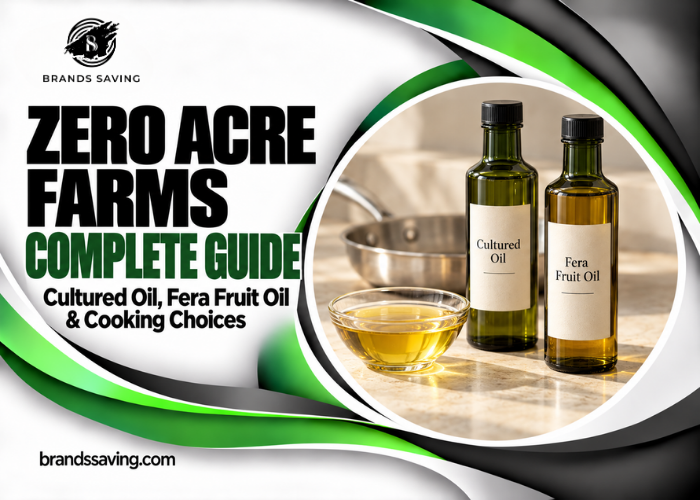
Choosing a cooking oil used to be straightforward: olive oil for flavor, vegetable oil for frying, and perhaps avocado oil when a recipe called for higher heat. Now the aisle is crowded with claims about seed oils, fermentation, fat composition, sustainability, and smoke points. Zero Acre Farms sits at the center of that conversation because it approaches cooking oil as something that can be redesigned from the way it is produced.
If you have searched for Zero Acre Farms cooking oil, you are probably trying to understand what is actually in the bottle, why a company would ferment sugarcane into oil, and whether the result makes sense for everyday meals. Another wrinkle is that the brand now talks about two distinct products: its original fermented Zero Acre Oil and Organic Fera fruit oil, which comes from palm fruit rather than fermentation.
This guide explains both oils, how their manufacturing methods differ, where each fits in a kitchen, and how to evaluate the company’s environmental and nutrition claims. It is not a hands-on product review, a medical endorsement, or a claim that one oil is automatically the healthiest choice for everyone.
Compare Zero Acre Oil and Organic Fera fruit oil on the company’s official website before deciding which cooking method or purchasing channel fits your needs.
Explore Zero Acre FarmsZero Acre Farms at a Glance
| Topic | What to know |
|---|---|
| Brand focus | Cooking oils designed for culinary performance and different agricultural inputs. |
| Zero Acre Oil | Fermentation-derived oil made using sugar from sugarcane; intended as a neutral all-purpose cooking oil. |
| Organic Fera fruit oil | Expeller-pressed oil from organic oleifera × guineensis palm fruit; positioned primarily for restaurant frying. |
| Primary distinction | Cultured Oil is fermented; Fera is pressed from fruit. They are not interchangeable names. |
| Best next step | Choose according to flavor, cooking temperature, price, availability, and the type of evidence behind product claims. |
What Is Zero Acre Farms?
Zero Acre Farms is a food company focused on alternatives to conventional cooking oils, especially oils used for high-temperature cooking and foodservice. Its pitch is not simply that a different crop can make oil. It argues that the production process, fatty-acid composition, cooking performance, and resource requirements deserve attention together. That combination is what makes the company unusual among cooking-oil brands.
Its first consumer-facing product was a fermentation-derived oil made from sugarcane feedstock. The company’s more recent Organic Fera fruit oil takes a different route: it is pressed from a specific palm-fruit hybrid and marketed as a high-performance frying oil. The current company website presents both products, with Fera featured prominently for professional kitchens and Zero Acre Oil listed for cooking at home.
The company’s positioning appeals to home cooks who want neutral flavor and high-heat flexibility, and to chefs who care about consistency, frying life, and food texture. It also attracts people interested in agricultural efficiency. Those are different priorities, however, and no single feature—whether a high smoke point or a low land-use figure—answers every buying question.
How Cultured Oil by Zero Acre Farms Is Made
From sugarcane to fermentation
Most familiar cooking oils begin with a plant that already stores substantial amounts of fat: olives, avocados, sunflower seeds, soybeans, or palm fruit. Cultured Oil takes a less familiar path. According to Zero Acre Farms, sugar from non-GMO sugarcane is supplied to oil-producing microorganisms in a controlled fermentation process. Over several days, those cultures convert the sugar into fats.
The process is closer in principle to other food fermentations than to squeezing oil from a seed. It does not mean the finished oil is sugary, and it should not be confused with a flavored or probiotic food. The microorganisms do the conversion work; the resulting oil is then separated, purified, and tested. The company describes its oil as a purified cooking fat, not a beverage or a living fermented culture.
Purification, testing, and the finished bottle
After fermentation, the oil is recovered from the culture, filtered, and purified. Zero Acre Farms says it tests batches for quality and fatty-acid composition, and that bottle-specific information can be accessed through its labeling system. Its original technical materials also mention mixed tocopherols, a form of vitamin E used as an antioxidant. Anyone with an ingredient-specific concern should check the current product label rather than assume the formulation has never changed.
The distinction between fermentation and genetic engineering is worth keeping clear. Fermentation is a manufacturing method used in many foods, while the genetic status of ingredients and production organisms is a separate question. The brand identifies its sugarcane input as non-GMO. For a precise answer about current production specifications, the official FAQ and package labeling are better references than generalized claims circulating online.
Zero Acre Farms Cooking Oil: Fat Profile, Flavor, and Smoke Point
Why the fatty-acid mix matters
Cooking oils contain different proportions of monounsaturated, polyunsaturated, and saturated fats. The proportions influence texture and behavior under heat, although they are not the only determinants of nutritional value. Zero Acre Farms states that its fermented oil contains roughly 90–94% monounsaturated fat, with relatively small amounts of polyunsaturated and saturated fat. Its published materials commonly describe the composition as approximately 93% monounsaturated, 4% saturated, and 3% polyunsaturated.
That is a distinctive profile compared with many conventional seed oils. But it is important not to turn a compositional difference into a clinical conclusion. Human health depends on overall diet, total energy intake, cooking habits, and what a fat replaces. A higher percentage of monounsaturated fat is a useful product characteristic; it is not proof that the oil prevents disease or that ordinary seed oils are inherently dangerous.
Neutral taste and high-temperature cooking
The company advertises a smoke point of up to 485°F for its cultured oil. A high smoke point is practical when searing, stir-frying, or frying, particularly when the cook wants to avoid visible smoking. Still, smoke point alone does not describe how an oil behaves through repeated heating. Time, oxygen exposure, food particles, temperature control, and the particular fatty acids present all matter.
Zero Acre Oil is presented as neutral rather than peppery, grassy, buttery, or nutty. That makes it a different proposition from a robust extra-virgin olive oil, where flavor is often part of the appeal. In a garlic-forward stir-fry, spicy marinade, or delicate cake, a restrained oil can leave the other ingredients in charge. In a tomato salad where the oil itself should taste delicious, a flavorful olive oil may be the more satisfying choice.
Everyday kitchen uses
The oil is intended to work across a wide range of recipes: pan-searing proteins, sautéing vegetables, frying potatoes, making dressings, and baking where a liquid neutral oil is appropriate. It remains liquid at refrigerator temperatures according to the brand’s materials, which can be convenient for cold sauces. The right substitution ratio depends on the recipe, particularly when replacing solid butter or shortening rather than another liquid oil.
One practical limitation is that a premium oil can be difficult to justify for every task. A cook who deep-fries in large batches may go through far more oil than someone who uses a tablespoon to sauté vegetables. That changes the economics considerably. The most useful comparison is cost per ounce or liter for the actual quantity you consume, not simply the attractiveness of a bottle or its marketing story.
What Is Zero Acre Farms Fera Fruit Oil?
Organic Fera fruit oil is a separate product and should not be described as fermented Cultured Oil. Zero Acre Farms identifies it as organic oleifera × guineensis palm fruit oil, pressed from fruit grown on Regenerative Organic Certified farms. The company says it is expeller-pressed, with no added preservatives or chemical solvents, and is Non-GMO Project Verified. Those are specific sourcing and processing claims about Fera, not descriptions of the cultured product.
Fera is designed with commercial frying in mind. The company lists a smoke point of 445°F and highlights a neutral taste, lower polyunsaturated-fat content, and the ability to maintain desirable frying characteristics over time. It also advertises a Seed Oil-Free Certified designation. Because this is fruit-derived palm oil, buyers should not confuse “seed oil-free” with “palm-free” or assume the environmental profile of every palm plantation is identical.
The brand says Fera contains around 12% polyunsaturated fat and less saturated fat than typical palm oil. It also emphasizes farming certification and land-use efficiency. Those details make Fera interesting for restaurants evaluating fryer oil, but they do not establish that every restaurant will obtain the same oil life, flavor, or operating savings. Fryer temperature, filtration, food type, and replacement practices remain important variables.
Why the Fera name matters
The name Fera is a branding term, not a generic category of cooking oil. It helps distinguish this particular palm-fruit oil from conventional palm oil and from the company’s fermented Zero Acre Oil. Searchers who type “zero acre farms fera fruit.oil” are often trying to locate this newer product or understand whether it replaced Cultured Oil. The clearest answer is that the company currently presents them as distinct offerings with different manufacturing methods and intended markets.
| Characteristic | Zero Acre Oil / Cultured Oil | Organic Fera fruit oil |
|---|---|---|
| Production | Microbial fermentation of sugarcane-derived sugar | Expeller pressing of organic palm fruit |
| Company-listed smoke point | Up to 485°F | 445°F |
| Flavor position | Neutral, versatile | Neutral, designed for clean frying |
| Main audience | Home cooks and general-purpose cooking | Restaurants and commercial frying |
| Buying route | Consumer shop listing | Restaurant sales and distributors |
| Important caveat | Company-published composition and performance claims | Specific certification and sourcing claims should be checked on current documentation |
Fera has its own product information and foodservice sales route. Review its sourcing and specifications separately from fermented Zero Acre Oil.
See Fera Fruit OilCultured Oil vs. Olive, Avocado, and Conventional Vegetable Oil
The most sensible comparison starts with cooking needs rather than declaring a universal winner. Extra-virgin olive oil contributes aroma and flavor, while refined avocado oil is often selected for its relatively neutral profile and high-heat versatility. Conventional canola and soybean oils tend to be more affordable and widely available. Cultured Oil positions itself as a premium neutral option with an unusually high monounsaturated-fat share.
Different oils can coexist in the same kitchen. Using olive oil for finishing and a neutral oil for a high-heat wok is a perfectly reasonable strategy. The presence of polyunsaturated fat in an oil does not automatically make it unsuitable for normal home cooking, and not all refined oils behave identically. Evaluate the specific oil, recipe, temperature, frequency of use, and budget rather than relying on sweeping online claims about entire categories.
| Oil type | Typical reason to choose it | Potential trade-off |
|---|---|---|
| Zero Acre Cultured Oil | Neutral taste, high company-listed smoke point, fermentation-based production | Premium positioning and narrower availability |
| Extra-virgin olive oil | Distinctive flavor and established culinary tradition | Strong taste may not suit every recipe |
| Refined avocado oil | Versatile neutral option for high heat | Price and authenticity can vary by brand |
| Canola oil | Widely available and generally budget-friendly | Less distinctive sourcing or premium positioning |
| Soybean oil | Common in foodservice and bulk cooking | Composition and frying practices vary by product and setting |
| Organic Fera fruit oil | Fruit-derived oil designed for commercial frying | Primarily a restaurant-oriented purchase path |
Is Zero Acre Farms Oil Healthier? Understanding the Evidence
The brand’s nutrition messaging focuses on monounsaturated fats, low omega-6 linoleic acid, and heat stability. Those are measurable or testable properties, and the company publishes technical explanations and comparisons. It also discusses aldehydes formed during heating. Laboratory measurements can help characterize an oil under particular conditions, but they should not be read as direct evidence that switching oils will prevent heart disease, obesity, or other medical conditions.
Much of the public debate around seed oils compresses complicated nutritional science into an either-or choice. The reality is more nuanced. Dietary polyunsaturated fats have roles in human nutrition, and replacing saturated fat with unsaturated fat can be beneficial in many dietary contexts. Repeated deep-frying, overheating, and poor oil maintenance are separate questions from whether an oil originates in a seed. A neutral assessment should keep those distinctions visible.
For consumers with medical dietary restrictions, the decision should be grounded in the nutrition label and qualified clinical advice. For everyone else, the most defensible takeaway is narrower: Cultured Oil offers a different fat profile and production method, while its real-world health advantages over a balanced diet using other suitable oils are not established simply by the company’s marketing claims.
Sustainability: Does Fermentation Use Fewer Resources?
One of the more interesting aspects of the Zero Acre Farms story is its attempt to change the agricultural inputs required for cooking fat. The company reports that producing its cultured oil uses 87% less land than canola oil and 99% less water than olive oil, based on its own published comparisons. These are substantial figures, but their interpretation depends on the assumptions, boundaries, and datasets used in the analysis.
Land, water, and greenhouse-gas comparisons can change depending on farming location, irrigation requirements, energy source, transport, processing, and how by-products are allocated. A fermentation facility also needs energy and infrastructure. The strongest environmental assessment would compare products on a consistent lifecycle basis and make the methodology transparent. The company’s sustainability report is a useful starting point, not a substitute for evaluating the assumptions behind each headline number.
Fera presents a different sustainability story. Its claim rests on fruit-oil productivity and farming certifications rather than fermentation. Palm-derived oils can produce a great deal of oil per acre, yet palm agriculture also has a history of deforestation and biodiversity concerns in some regions. The relevant question is where and how a particular crop was grown, what certifications cover, and whether supply-chain verification is credible.
Price, Availability, and How to Buy
Zero Acre Oil has been offered through the company’s consumer storefront in 16-fluid-ounce bottles. The main website also links to shopping information, while Organic Fera fruit oil is presented with restaurant-sales and distributor options. Product availability, bundle sizes, and promotions can change, so a live product page is more reliable than a fixed price quoted in a guide that may be read months later.
When comparing prices, calculate cost per fluid ounce and consider shipping, minimum quantities, and how much oil you actually use. A premium oil used for occasional searing may be a manageable purchase. The same product used in a household deep fryer could carry a much higher ongoing cost. Restaurant buyers should compare total operating costs, including replacement frequency and filtration, rather than relying on the price of a single container.
It is also worth checking that you are purchasing the product you intended. “Zero Acre Oil,” “Cultured Oil,” and “Fera fruit oil” appear in related brand conversations, but they do not all refer to the same ingredient. Read the current product description, packaging, and ingredient statement before ordering.
See current bottle sizes, ingredients, and purchasing options directly from Zero Acre Farms rather than relying on an outdated price quotation.
View Cooking Oil OptionsWho Might Choose Zero Acre Farms—and Who Might Not?
Cultured Oil may be a practical option for home cooks who regularly want a neutral liquid oil, use high-heat techniques, and are specifically interested in fermentation-based food technology. It may also appeal to people who value batch transparency and want to examine the composition of the fat they buy. Its appeal is strongest when those features matter enough to justify a premium purchase.
Someone who mainly cooks with extra-virgin olive oil for its flavor may have little reason to switch. Budget-conscious households can also prepare excellent food with ordinary cooking oils when used appropriately. And consumers seeking a clinically proven solution to a health concern should not treat a cooking-oil purchase as medical treatment.
Organic Fera fruit oil is a different proposition. Its foodservice positioning makes the most sense for chefs and restaurant operators who can test its frying performance under their own conditions. A home cook interested in the Fera product should first verify whether consumer-size purchasing is available and whether its fruit-derived profile is actually what they want.
| Your priority | Most useful direction |
|---|---|
| Neutral, versatile home cooking | Compare Cultured Oil with refined avocado or other neutral oils |
| Flavorful finishing oil | Consider a high-quality extra-virgin olive oil |
| Commercial deep-frying | Investigate Fera specifications and conduct a controlled kitchen trial |
| Lowest everyday cost | Compare locally available conventional oils by unit price |
| Environmental transparency | Read the methodology and certifications, not just headline percentages |
Frequently Asked Questions About Zero Acre Farms
What is Zero Acre Farms?
Zero Acre Farms develops and markets cooking oils with a focus on culinary performance, fat composition, and sourcing. Its products include fermentation-derived Zero Acre Oil and Organic Fera fruit oil.
What is cultured oil by Zero Acre Farms?
Cultured Oil is a liquid cooking oil made through fermentation of sugar derived from sugarcane. Microorganisms convert the sugar into fats, which are then recovered and purified.
Is Zero Acre Farms cooking oil made from seed oils?
The company describes its fermented Zero Acre Oil as made from sugarcane through fermentation rather than extracted from oilseeds. Organic Fera is pressed from palm fruit, not made by the same process.
Is Zero Acre Oil the same as Fera fruit oil?
No. Zero Acre Oil is fermentation-derived, while Fera is an expeller-pressed organic palm-fruit oil positioned particularly for restaurant frying.
What is the smoke point of Zero Acre Cultured Oil?
Zero Acre Farms advertises a smoke point of up to 485°F for its cultured oil. Actual cooking outcomes also depend on temperature management, duration, and food residue.
What is the smoke point of Organic Fera fruit oil?
The company lists a 445°F smoke point for Organic Fera fruit oil, which it promotes for professional frying applications.
Does Zero Acre Oil contain sugar?
The brand explains that sugar is used as fermentation feedstock and converted into fats; the finished oil is not described as containing sugar. Always check the current ingredient statement.
Can Zero Acre Oil be used for baking?
Yes. The company promotes it as a neutral all-purpose oil, including for recipes that call for liquid cooking oil. Replacing butter or shortening may require recipe adjustments.
Is Zero Acre Farms oil healthier than olive oil?
Its cultured oil has a different fatty-acid composition, but that alone does not establish superior health outcomes. Olive oil also has extensive culinary and nutritional research behind it.
Where can I buy Zero Acre Farms oil?
The company maintains an official consumer product page for Zero Acre Oil. Fera is presented mainly through foodservice sales and distributors; check current availability directly.
What do Zero Acre Farms reviews usually focus on?
People researching the brand commonly ask about neutral flavor, high-heat performance, price, fermentation, and environmental claims. Individual experiences should not be mistaken for controlled testing.
Is Fera fruit oil sustainable?
The brand highlights certified organic and regenerative sourcing, alongside land-use efficiency. A full environmental conclusion depends on the supply chain and the evidence supporting those claims.
The Bottom Line: Understanding the Choice
Zero Acre Farms is worth understanding because it illustrates two different ways to rethink cooking oil. Its cultured product uses fermentation to create a neutral, monounsaturated-fat-rich oil from sugarcane-derived sugar. Its Organic Fera fruit oil uses certified organic palm fruit and targets the practical demands of professional frying. They share a brand philosophy, but not a manufacturing process.
Neither product needs a numerical score to be useful to readers. The meaningful questions are whether the cooking performance fits your recipes, whether the current ingredients and sourcing meet your priorities, and whether the price works for your kitchen. Treat the brand’s technical reports as evidence to examine, not as a substitute for independent health research or your own cooking requirements. That approach leads to a better buying decision than declaring one oil universally superior.
Read the current product specifications and decide whether fermented cooking oil or Fera fruit oil better suits your cooking needs.
Visit the Official Website